Author : Aparna Singh Overview Section XV of IPC sets down arrangements identified with offenses identifying with religion. This Chapter of the Indian Penal Code is introduced on the rule that opportunity to follow one’s religion is a basic aspect of one’s privilege and accordingly strict conclusions must not be insulted. In any case, this
www.aishwaryasandeep.com is hiring interns Require Online Interns for Content Writing (Legal) Number of positions :- 05 nos Need 5 Interns for an online magazine www.aishwaryasandeep.com. Internship will be online. The candidate should have flair for creative writing. Qualification:- Freshers Post Graduates/ Graduates. Under grads with experience can apply too. Certificate and experience letter will be provided. Interested
Case Name : National Legal Services Authority Act (NALSA) v/s Union of India and Others Author : Varnika Verma CITATIONS AIR 2014 SC 1863 MANU/SC/0309/2014 2014 (5) SCALE 438 2014 (4) SCJ 148 JT 2014 (5) SC 182 2014 (7) Bom CR 1 BENCH Justice K.S. Radhakrishnan, Justice A.K.Sikri. INTRODUCTION The case is concerned to
CASE NAME : SUPREME COURT ADVOCATES ON RECORD ASSOCIATION VS UNION OF INDIA AUTHOR : VARNIKA VERMA CITATIONS AIR 1994 SC 268 MANU/SC/0073/1994 1993 (5) SLR 337 (SC) [1993] SUPP 2 SCR 659 (1993) 4 SCC 441 BENCH Justice Jagdish Singh Khehar, Justice Chelameswar, Justice Madan B. Lokur, Justice Kurian Joseph, Justice Adarsh Kumar Goel.
CASE NAME : EMMANUEL VS STATE OF KERALA AUTHOR : VARNIKA VERMA CITATIONS AIR 1987 SC 748 1986 Cri LJ 1736 MANU/SC/0061/1986 1986 (2) SCALE 217 (1986) 3 SC 615 [1986] 3 SCR 518 BENCH Justice Reddy O. Chinappa INTRODUCTION The Supreme Court of India noticed that the school children were dismissed for not singing
Author : Kriti Gandhi Copyright is a exclusive right of the Copyright Owner. Where the right to copy or reproduce a work the author acquires copyright. It is a product of human ability and mental capacity to do something creative. Includes writing, play, music and other creative activities. Copyright often creates Right to Rem and
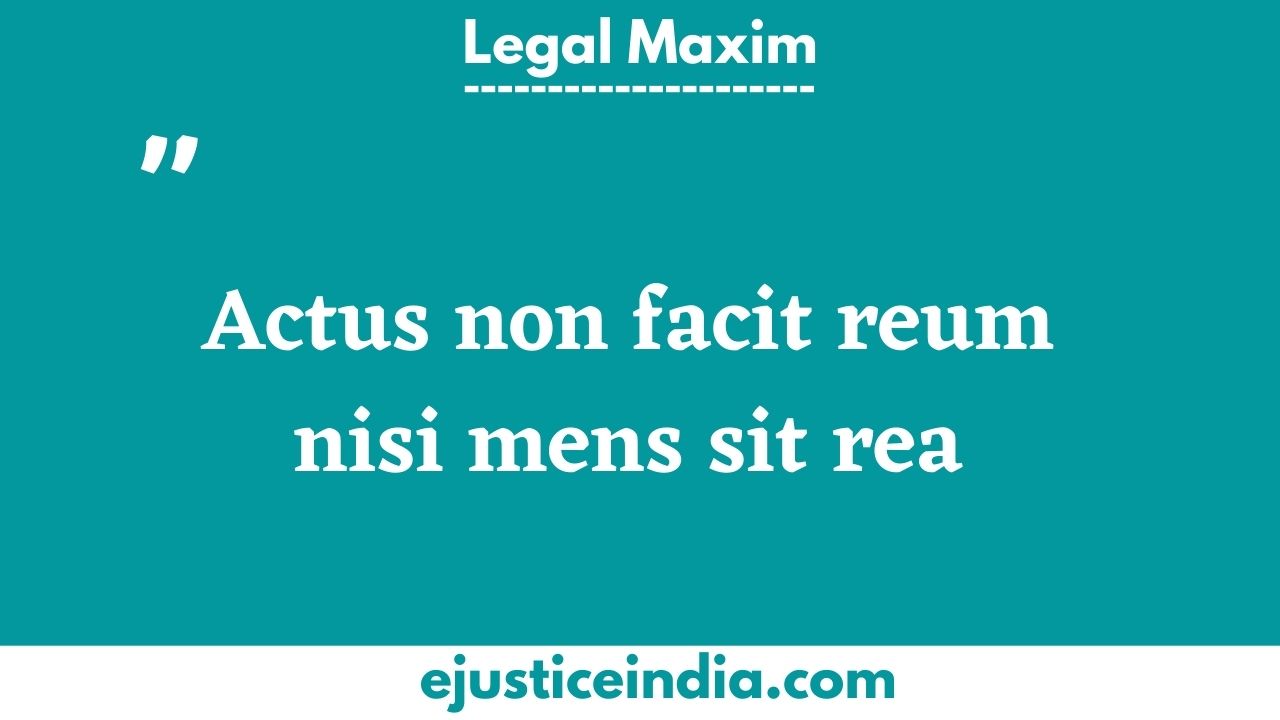
Author : Tanvi Gupta Actus non facit reum nisi mens sit rea is a Latin maxim meaning an accused cannot be held guilty without criminal intent. Generally, any act has two intents physical and mental intent i.e. actus rius and mens rea. An act of the accused combined with an intention to specific criminal wrong proves
Author : Tanvi Gupta Actus nemini facit injurium is a Latin maxim meaning the act of law does injury to no one. This maxim states that bringing a law suit by plaintiff against other party causes no harm to second party. Application of law is based on this principle that if any person act beyond